Command a Squad Tanks Guide: What Tanks Are and What They Do
Tanks in Command a Squad are one of three unit types you can recruit, alongside soldiers and Artillery. Here is what tanks are and the role they play in a match.
Quick answer
Tanks are one of the three unit types you can recruit in Command a Squad, alongside soldiers and Artillery. They are a unit category inside your recruitable forces, not a separate mode, and they fight as part of the team you command in WW1 team-vs-team matches.
- Soldiers, Artillery and Tanks are the three categories the game lets you recruit.
- Recruiting sits alongside capturing points, commanding your squad, and collecting and upgrading squads in the game's core loop.
- Enemy tanks matter too: in one recorded match, a player chose to retreat to their camp rather than keep fighting a position while the other team had a tank.
Command a Squad is a WW1 commanding game by Wagyu Games where you control a squad of soldiers in action-packed team-vs-team matches. The game's own feature list spells out the loop tanks live inside: recruit soldiers, Artillery and Tanks; capture points; command your squad; collect and upgrade your squads. Tanks, in other words, are not a standalone feature — they are a unit category, the same slot soldiers and Artillery occupy, and they matter both when you build your own forces and when the other team fields one against you.
Where tanks fit in your forces
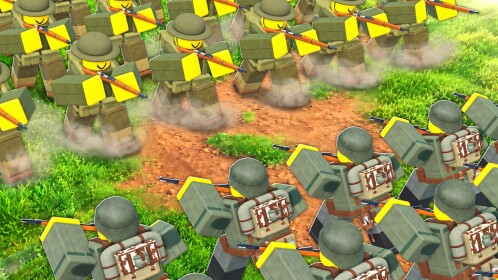
Recruiting is how your army comes together, and Tanks are one of the three categories on that list. The units you recruit become your forces in a match, and the game pairs recruiting with collecting and upgrading squads — the forces you bring in are also the squads you keep developing over time. That puts tanks in two parts of the game at once: the force you assemble and grow, and the units under your command once the match starts. For the recruiting process itself, the guide on how to recruit units walks through it step by step, and the units list lays out the full roster.
What a tank does on the battlefield
The most concrete picture of a tank's match role comes from a single recorded session. The opposing team had a tank, and the player commanding the squad decided not to keep contesting the position: they pulled their units back to their own camp instead.
Keep the weight of that claim honest. It is one observation from one session, recording one player's decision — not proof that tanks win fights outright, and not a rule that retreating is always the right call. What it does show is the kind of decision a tank forces: with the enemy tank on the field, holding the position stopped being worth it for that player in that match, and regrouping at camp became the better command choice.
That judgment call — hold, push, or pull back — is the command layer of the game at work. Matches turn on capture points, and commanding your squad well means recognizing when a fight is no longer worth continuing. The squad orders page covers what you can direct your units to do, and unit positioning goes deeper on where to place them.
Bringing tanks into your squad
The official feature list groups tanks with your other recruitable forces — "Recruit soldiers, Artillery and Tanks!" — but it does not spell out tank-specific recruitment details; the guide on how to recruit units covers the recruiting process. When you are weighing tanks against the alternatives, the infantry guide and artillery guide cover the other categories, and which units to use compares the options by situation. If you are new to the game, the beginner guide covers the fundamentals first.
The bottom line
Tanks in Command a Squad are a recruitable unit category — one of three, next to soldiers and Artillery. You recruit them into the forces you collect, upgrade and command, and they take the field in WW1 team-vs-team matches built around capturing points. They cut both ways: the only tank sighting on record ended with a squad falling back to camp — a single example rather than a rule, but a clear picture of why a tank on the field is hard to ignore.
Related Guides
Which Units to Use per Objective
Pick the right unit for each objective, from holding capture points to pushing trenches, without guessing at roles.
Units List: Every Verified Unit
Every verified unit in the game and what it does, in one list you can check before your next recruit.
Capture Points: Take & Hold Objectives
How a capture point actually flips: stand inside the flag ring, survive the contest, and keep your squad on the objective.